
Manufacturing Hiring Best Practices: The 5 Behaviors That Actually Predict Success on the Production Floor
Feb 11, 2026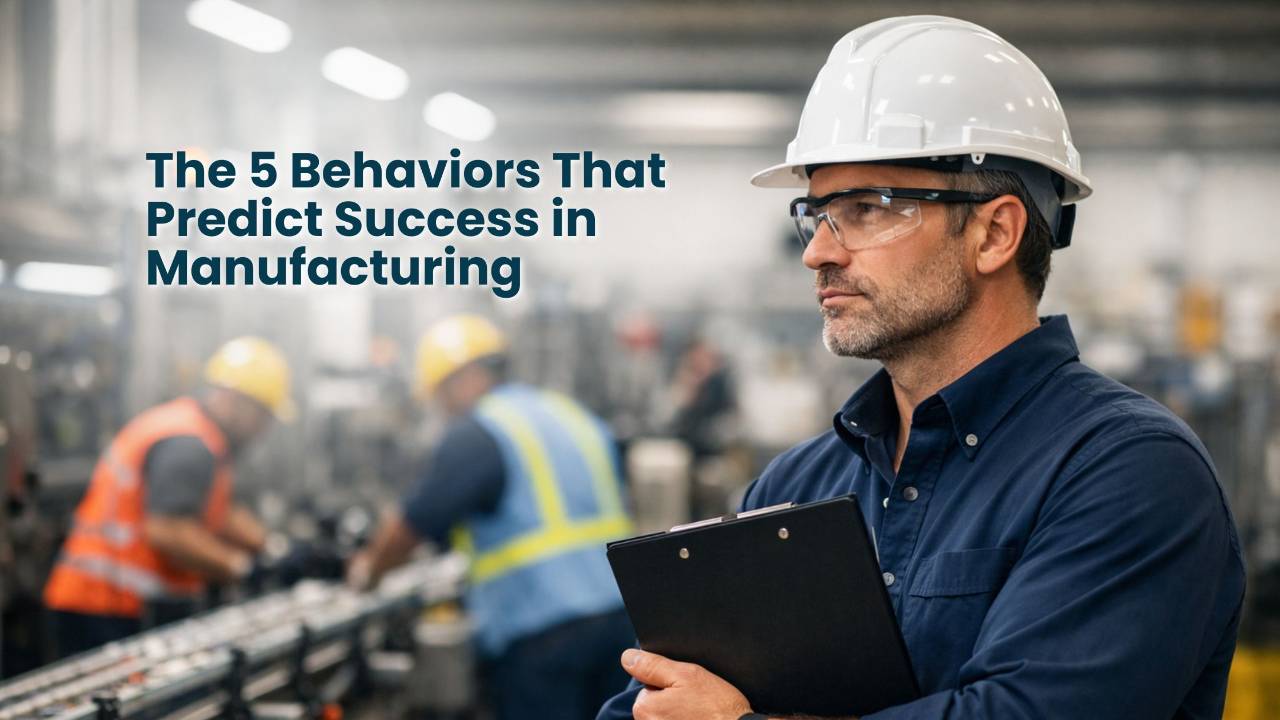
If you hire for the wrong traits in manufacturing, you do not just miss a quota. You risk safety, morale and margins. Here is how to evaluate the behaviors that truly drive performance.
A single hiring mistake in manufacturing does not stay contained.
It shows up in missed production targets.
In safety incidents.
In overtime that burns out your strongest operators.
Most leaders do not intend to hire poorly. They hire fast. They hire under pressure. They hire based on what looks good on paper.
The problem is that resumes and tenure do not predict how someone will perform when a packaging line goes down at 2:17 p.m. and three trucks are waiting at the dock.
In this article you will learn the five observable behaviors that separate average manufacturing employees from high-performing ones and how to apply smarter manufacturing hiring best practices to reduce turnover, strengthen reliability on the production floor and build high-performing operations teams.
Why Traditional Hiring Advice Fails in Manufacturing
Most hiring advice was built for offices.
Manufacturing floors operate differently.
They are defined by:
-
Equipment breakdowns
-
Material variability
-
Tight production schedules
-
Safety risks
-
Cross-functional friction
In that environment hiring in the manufacturing industry carries real stakes. One weak hire can affect output, margins and morale.
Yet many manufacturing operations recruitment processes still focus on:
-
Years of experience
-
Certifications
-
Keyword-heavy resumes
-
Culture fit based on gut instinct
Experience matters. Skills matter.
Behavior under pressure matters more.
The 5 Behaviors That Predict Success in Manufacturing
These are not personality traits you hope to see.
They are observable behaviors you can evaluate intentionally.
1. Problem Solving Under Pressure
When a packaging line breaks down two types of operators emerge.
The average operator panics.
They wait for maintenance.
They escalate the problem without context.
The high-value operator diagnoses first.
They identify possible causes.
They implement a safe temporary workaround if possible.
Then they escalate with solutions not complaints.
What to Look For in Interviews
Ask candidates to describe a real production issue.
Then listen for:
-
Ownership language such as I did, I tried or I adjusted
-
Calm structured thinking
-
Resourcefulness
-
Collaboration with maintenance or leadership
Problem solving in manufacturing jobs is daily survival.
2. Accountability and Reliability
Reliability on the production floor is not glamorous.
It is showing up.
It is following standards.
It is documenting accurately.
It is escalating when necessary.
Many leaders worry that strict standards will damage culture.
In reality reliability strengthens culture. Unpredictability damages it.
When teammates cannot depend on each other frustration builds. Strong operators end up carrying the load.
Behavioral Signals to Assess
-
How candidates talk about attendance
-
Whether they blame others for missed results
-
If they understand SOPs as guardrails not restrictions
Clear expectations and accountability reduce burnout. They do not create it.
3. Communication That Solves Problems
Consider a material arrives out of spec.
One employee vents to coworkers.
Another documents the variance, gathers data and collaborates with procurement.
Same issue. Different outcome.
Strong communicators do not escalate emotionally. They escalate strategically.
Interview Clue
Pay attention to energy when they describe past conflicts.
Do they:
-
Speak with ownership and clarity
-
Focus on resolution
-
Show respect for cross-functional partners
Evaluating manufacturing talent means assessing how they influence morale not just machines.
4. Curiosity and Learning Agility
Automation and digital systems are reshaping manufacturing leadership and hiring decisions.
The operator who refuses to learn new technology becomes a bottleneck.
The curious operator adapts.
Many experienced leaders say the same thing. They can train skills. They cannot train curiosity.
Learning agility now outweighs static technical mastery.
What This Means for Hiring
When building high-performing operations teams look for:
-
Examples of self-initiated learning
-
Stories of adapting to new systems
-
Comfort with feedback
Curiosity protects your operation against stagnation.
5. Calm Under Pressure
Calm does not mean disengaged.
It means controlled.
When production pressure rises calm leaders stabilize the floor. Reactive leaders amplify chaos.
Calm signals control.
This trait becomes even more critical in supervisory roles.
A Practical Evaluation Tip
During interviews introduce a mildly complex scenario.
Watch how candidates think out loud.
-
Do they jump to conclusions
-
Do they slow down and assess
-
Do they prioritize safety before speed
Reducing turnover in manufacturing often starts by hiring people who regulate themselves under stress.
Why Gut Instinct Is Not Enough
Many hiring managers trust their intuition.
The candidate felt right.
They had good energy.
They reminded them of someone successful.
Instinct has a place.
Structured evaluation creates consistency.
High-performing manufacturing operations recruitment processes:
-
Define behavioral standards before interviews
-
Use consistent scenario-based questions
-
Score observable behaviors not charisma
-
Align leadership on what success actually looks like
Standards do not shrink the talent pool.
Standards clarify who belongs in it.
Applying These Manufacturing Hiring Best Practices Immediately
You do not need to redesign your entire process tomorrow.
Start here:
-
Identify the top two behaviors that matter most in your plant
-
Create one scenario question for each
-
Score answers based on observable behaviors
-
Debrief interviews around behaviors not vibes
That shift alone will strengthen how you are evaluating manufacturing talent.
Key Takeaways
-
Hiring in the manufacturing industry carries operational, financial and safety consequences
-
Resumes and tenure do not reliably predict performance under production pressure
-
The five most predictive traits of top manufacturing employees are structured problem solving, accountability and reliability, strategic communication, curiosity and learning agility and calm under pressure
-
Structured interviews reduce bias and mis-hires
-
Behavioral clarity improves reliability on the production floor and strengthens morale
-
Strong standards reduce turnover in manufacturing by protecting high performers from burnout
Final Thoughts
Manufacturing does not reward the flashiest resume.
It rewards dependable behavior.
When leaders shift from hiring for credentials to hiring for observable traits output improves. Safety strengthens. Morale stabilizes.
Decisions feel clearer.
If this perspective resonated reflect on your next open role.
What behaviors actually determine success on your production floor?
If you want to go deeper listen to the full podcast episode where we break down these ideas in more detail and walk through real-world hiring scenarios.
Skills get people hired.
Behavior determines whether it works.
If you want a deeper dive into this topic, I unpack it step by step on my YouTube channel, including real examples from the production floor and how to structure your interviews more effectively.
Stay connected with news and updates!
Join our mailing list to receive the latest news and updates from our team.
Don't worry, your information will not be shared.
We hate SPAM. We will never sell your information, for any reason.